
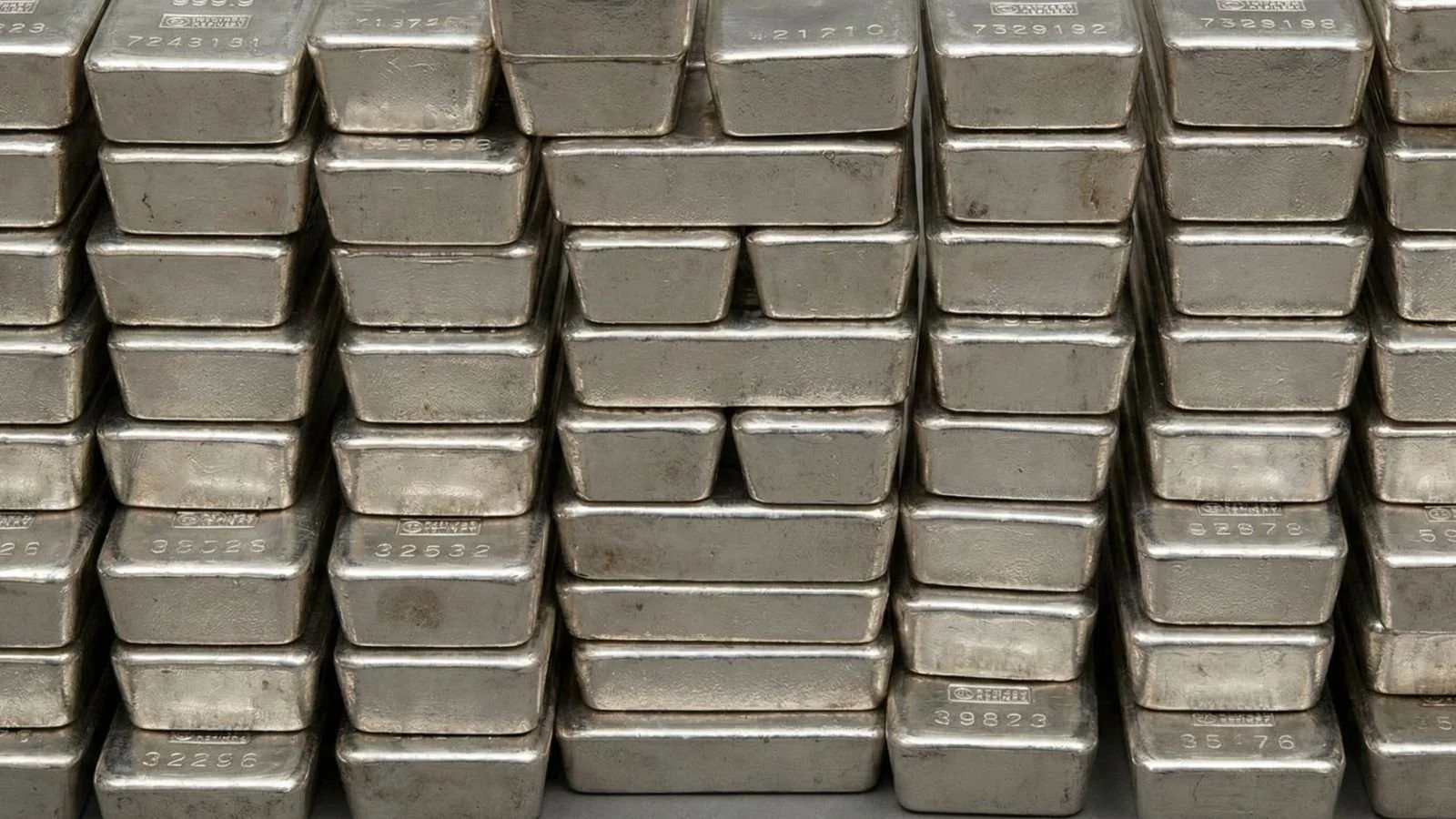
Silver-1 Mine, Ecuador

200,000-700,000 tonnes at 480-800 g/t silver and approximately 3 g/t gold, with previous exploration showing high potential for expansion.
High Grade

A historical tailings facility has been identified on site. Sampling carried out in 2007 estimated 200,000 tonnes at an average grade of 92 g/t. Modern sampling undertaken by Trinity One returned grades of 118.47 g/t Ag and 0.50 g/t Au, and 132.82 g/t Ag and 0.58 g/t Au.
Previous Mining Tailings

Past operations produced high grade silver between 1989 and 1994, with approximately 3,600m of underground development across multiple levels, and a historic plant footprint still on site.
Past producer

Historic UN drilling returned 2.60 m at 1,240 g/t Ag, including 0.25 m at 8,002 g/t Ag, from approximately 107.6 m vertical depth. The reported depth of historical mining was 90 m.
High Grade Silver At Depth

Located just 20 km from Cuenca, with road access, power, nearby workforce. The Company is currently in discussions with contractors to commence field based verification and exploration work, which can be completed under existing permitting.
Drill Ready
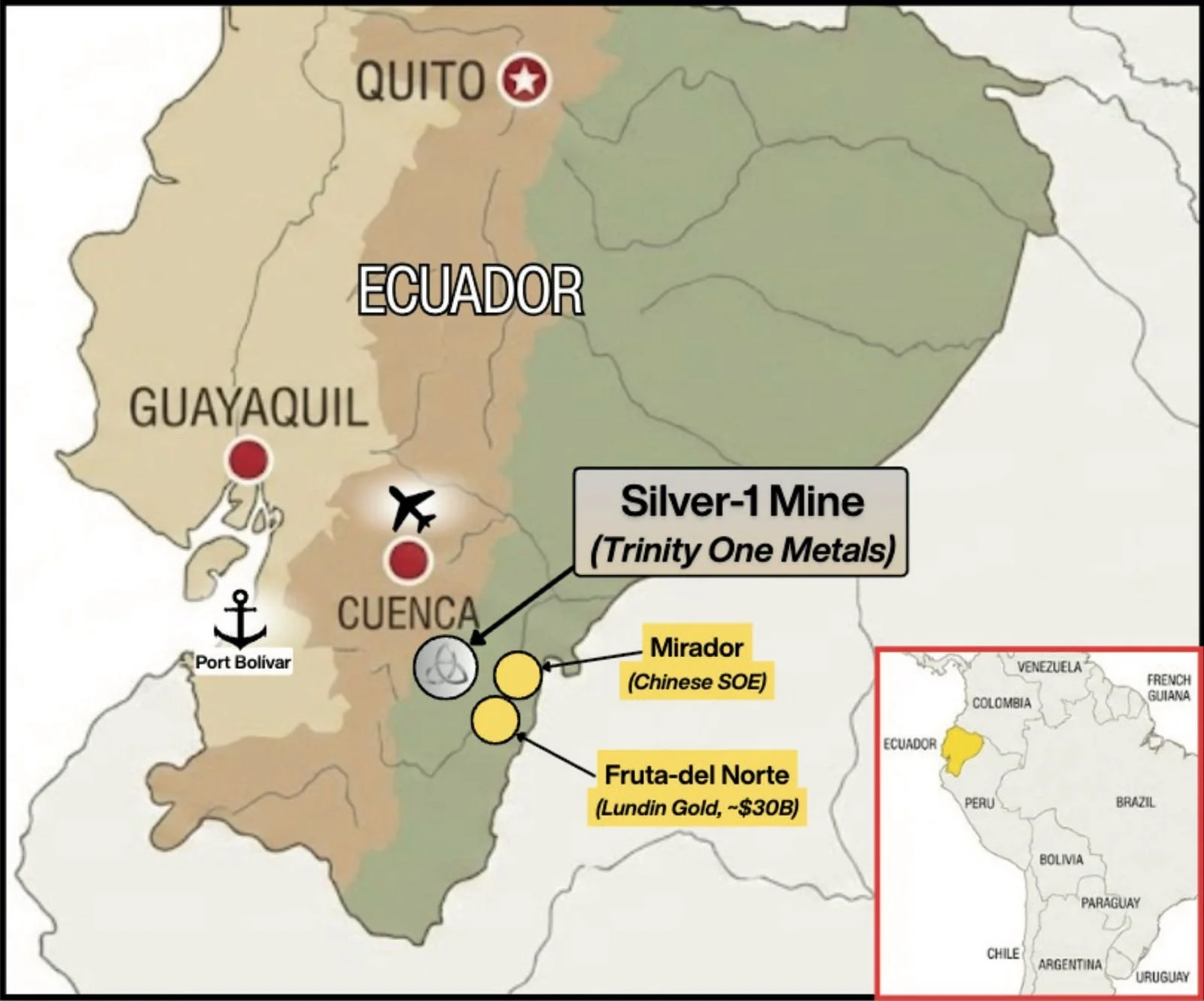
Trinity One has signed an agreement to acquire 100% ownership of the Silver-1 Mine in Southern Ecuador, through the acquisition of the project holding company. Silver-1 is a high grade, past producing silver asset located in southern Ecuador’s premier mining corridor, within the same belt as Fruta del Norte and Mirador.
The project benefits from an excellent location approximately one hour drive from Cuenca, Ecuador’s third largest city, with established access to power, water, labour, transport links. The Silver-1 Mine concession covers 3,108 hectares.
The Silver-1 Mine is underpinned by extensive historical data and underground development, centred on a well defined high grade core at the Ocashuaico sector. From historical reports the Company has outlined an initial exploration target of 200,000 - 700,000 tonnes at 480 - 800 g/t silver and approximately 3 g/t gold, with previous exploration showing high potential for expansion; with mineralisation remaining open along strike and down dip. Beyond the core zone, district scale conceptual upside has been identified, supported by a second priority corridor at Shunaste, representing a clear opportunity for resource growth.
Ecuador provides a compelling jurisdictional backdrop for Silver-1, with a proven mining framework demonstrated by major operating mines and established export pathways. Southern Ecuador sits within a highly endowed Andean belt with a long history of precious-metals production, reinforcing the strategic appeal of advancing a high-grade silver-gold project in this region.
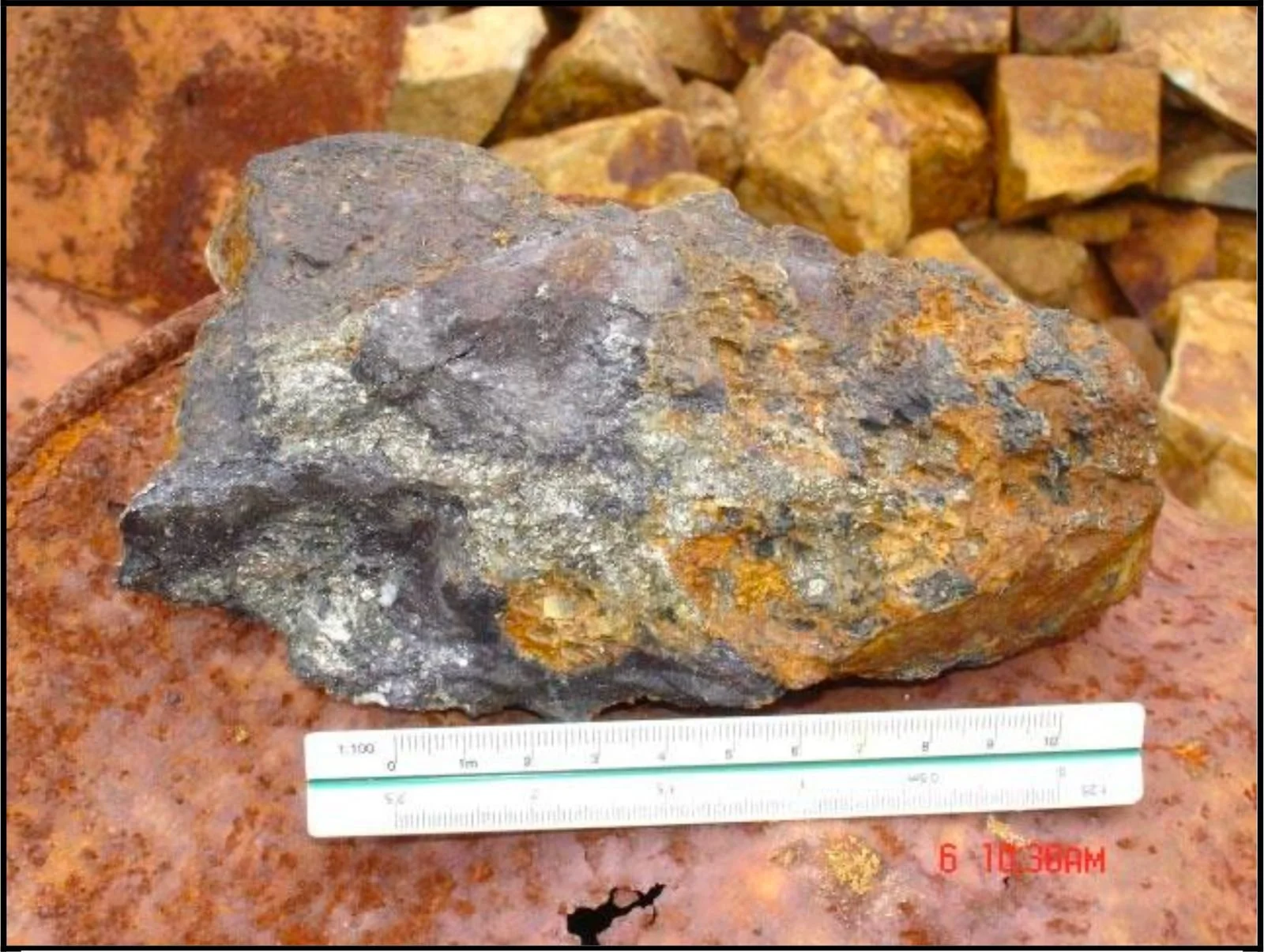
The Silver-1 Mine was initially discovered in 1966 following a regional geochemical survey conducted by the United Nations Development Programme. This early work identified anomalous silver and base metal signatures, which prompted a series of follow up exploration programs aimed at delineating the extent and character of mineralisation within the area.
Subsequent exploration undertaken between 1969 and 1972 included geophysical surveys, detailed soil geochemistry, trenching, and eight diamond drill holes. These programs successfully identified mineralisation in two principal sectors: the Shunaste Sector, located immediately north of the town of San Bartolomé, and the Ocashuaico Sector, situated to the northwest. Both sectors are fully contained within the boundaries of the Silver-1 Mine concession and represent the core focus of historical exploration and development activity.
Between 1976 and 1978, the United Nations Rotary Foundation conducted more advanced investigations across both sectors. This work program included additional trenching, drilling, and the excavation of exploration pits, further confirming the continuity and structural control of the mineralised vein systems and supporting the advancement of the project toward small scale production.
From 1989 to 1994, a joint venture between Nissho Iwai of Japan and Ag-Armeno Mines & Minerals Inc. of Canada conducted further exploration and small scale mining activities at the Silver-1 Mine. During this period, mining operations were carried out on two principal vein structures accessed from three main levels via adits, employing standard underground mining methods. Approximately 3,570 metres of underground development was completed during this phase of operations. During this time, a 100 tonne per day mill was reported to have been in operation. The average silver price over this period was approximately $4-5/oz. An historical tailings dam has been identified on site and will be subject to further economic assessment by the company.